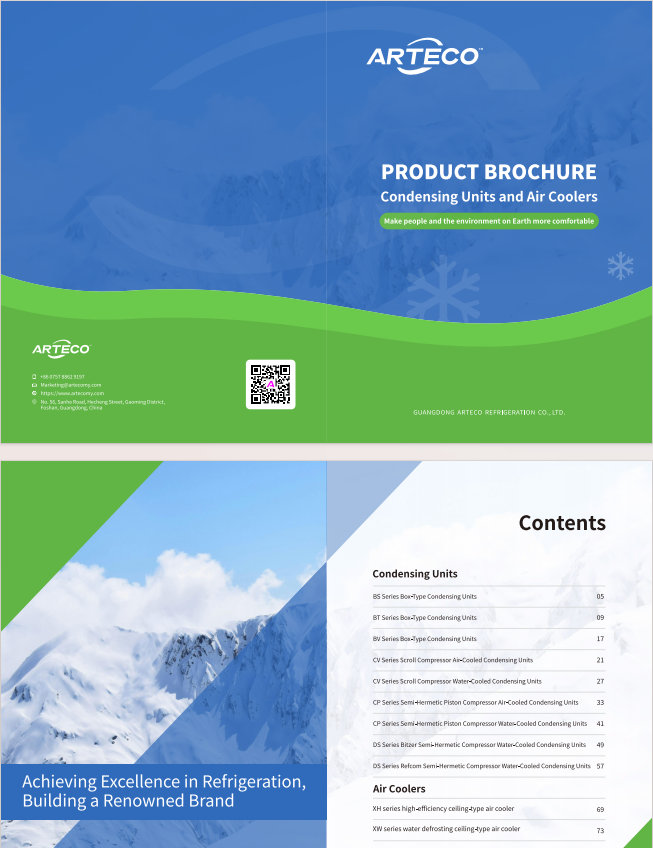
Your Step-by-Step Guide to Efficient Cooling Solutions
1. Understanding Your Cooling Needs
Selecting the right condensing unit starts with a clear understanding of your project needs. Four key factors should be considered:
Cooling Load: Includes product heat, insulation quality, air infiltration, etc.
Target Storage Temperature: Based on the specific type of goods stored.
Ambient Conditions: Outdoor climate, ventilation, and installation environment.
Regulatory Compliance: Local laws regarding refrigerants and energy efficiency.
2.What Are You Storing?
The first step in choosing a condensing unit is understanding what kind of goods you're storing. Different products require different storage temperatures:
| Cold Storage Application | Recommended Temp. | Cold Storage Application | Recommended Temp. |
| Bananas and Other Items | 11-16℃ | Red Wine and Chocolate Storage | 7-18℃ |
| Cucumber, Tomato, Bean, Persimmon Chili, Pineapple, Oranges, Etc | 7-13℃ | Storage of Eggs, Milk, Tea, Etc | 2-5℃ |
| Potatoes, Mountain Flowers, Onions, Oranges, Lychees, Etc | 2-4℃ | Ice Fresh Fish, Cold Fresh Meat, Cooked Food, Etc | -1-2℃ |
| Chinese Cabbage, Garlic Sprouts, Carrots, Lettuce, Apples, Pears, Etc | 0-2℃ | Ice Storage Facility | -5 - -10℃ |
| Frozen Meat, Frozen Dumplings, Rice Dumpling, Popsicle, Ice Cream, Etc | -18℃ | Quick Freezing Processing Warehouse | -2 - -35℃ |
| Frozen Shrimp, Fish, Ice Cream, Etc | -2 - -23℃ | Tuna Frozen Storage Warehouse | -55 - -60℃ |
3. Matching the Storage Temperature
For optimal performance, the evaporating temperature should align with the storage conditions. Refer to the table below for model selection:
| Storage Temp. | Evaporating Temp. | Recommended Model |
| +10°C | 0°C | High Temp. Unit (H) |
| 0°C | -8°C | Medium Temp. Unit (M) |
| -18°C | -25°C | Low Temp. Unit (L) |
| -25°C | -31°C | Quick Freezing Temp, Unit(J) |
| -35°C | -41°C | Quick Freezing Temp, Unit(J) |
| -55°C | -60°C | Quick Freezing Temp, Unit(J) |
4. Adapt to Your Environment
Standard Ambient Conditions: Standard refrigeration units perform well in environments up to 32°C.
Hot Climates: For areas exceeding 38°C, opt for units with enhanced condenser systems.
Voltage Options: Standard 380V/3-phase. Custom voltage options available upon request.
5. Choosing the Right Refrigerant
ARTECO supports multiple refrigerants depending on environmental needs and temperature:
R22: Traditional choice, effective at low temps, but with environmental limitations.
R404A, R507A: Good global availability and performance; medium environmental impact.
R448A, R449A: Next-gen options with zero ozone depletion potential (ODP) and low global warming potential (GWP) — ideal for sustainable systems.
Still Have Questions?
Contact our expert team for customized advice or download the full ARTECO Condensing Units Technical Specification Sheet.
 marketing@brdecogroup.com
 +86 13318205907
 EN
EN EN
EN CN
CN FR
FR




 Message
 WhatsApp